Fiberglass vs Concrete vs Vinyl Pools
Which Is Right for You?
When comparing fiberglass vs concrete vs vinyl pools, many homeowners are surprised by how differently these inground pool types perform over time. While all three can create an attractive backyard, they vary significantly in upfront cost, installation timeline, maintenance requirements, and long-term ownership experience.
Homeowners researching pools today often weigh fiberglass pools, concrete (gunite) pools, and vinyl liner pools side by side, trying to understand not just how they look when new, but what ownership actually feels like years down the road. Factors like surface durability, chemical demand, repairs, and resale impact tend to matter more over time than initial impressions.
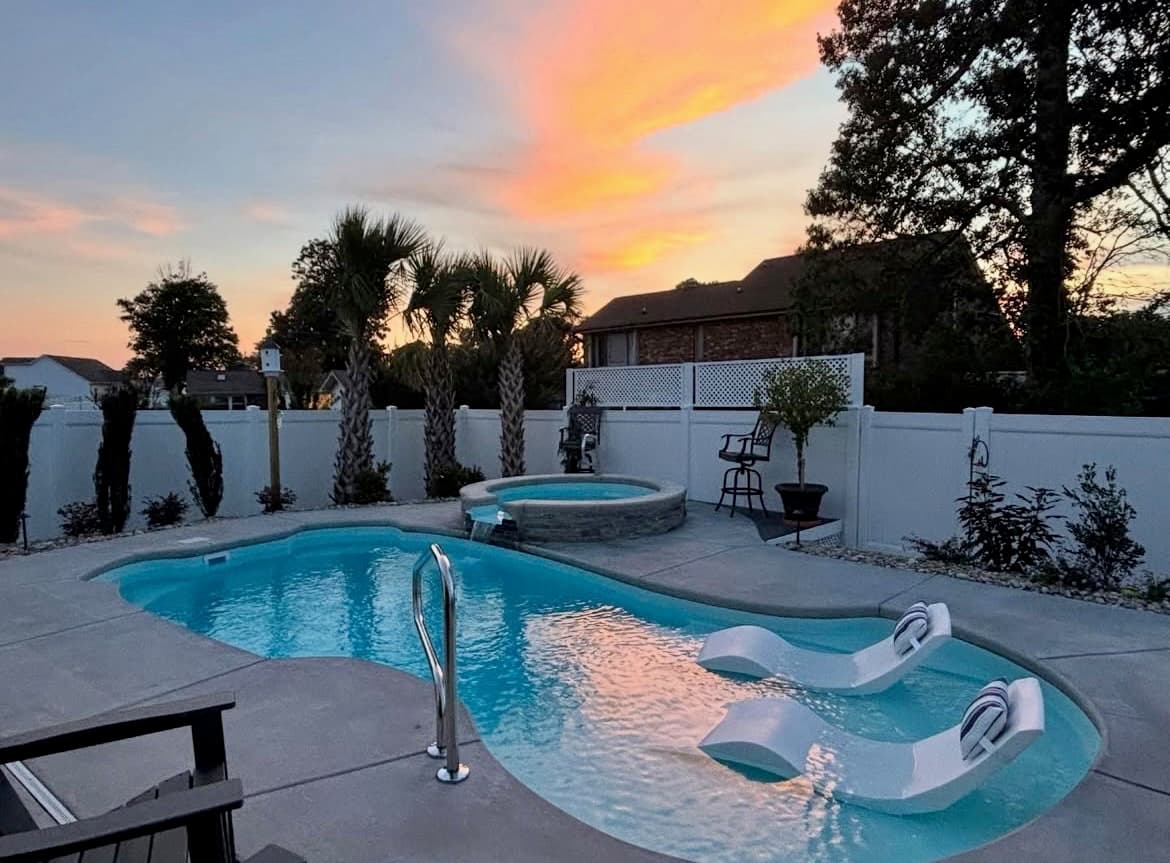
Quick Comparison of Pool Types
Quick comparison of fiberglass, concrete (gunite), and vinyl liner pools across key ownership factors.
| Feature | Fiberglass Pools | Concrete (Gunite) Pools | Vinyl Liner Pools |
|---|---|---|---|
| Installation Time | 2–4 weeks (typical) | 3–6+ months (varies) | 4–8 weeks (typical) |
| Initial Cost Range | $$–$$$ | $$$$ | $–$$ |
| Maintenance | Very low | High | Moderate |
| Surface Texture | Smooth, comfortable | Rough / porous | Smooth |
| Algae Resistance | Excellent | Low | Moderate |
| Long-Term Repairs | Minimal | Frequent resurfacing | Liner replacements |
| Lifetime Ownership Cost | Lowest overall | Highest overall | Moderate |
| Climate / Soil Performance | Excellent (engineered shell) | Variable (site-built) | Variable (liner + wall system) |
| Best For | Predictable pricing, faster installs, lower long-term maintenance | Fully custom shapes, integrated features, complex designs | Entry-level budgets, shorter ownership horizons |
Fiberglass Pools: The Modern Standard for Smart Homeowners
Fiberglass pools have become the fastest-growing segment of the inground pool market. Unlike pools built entirely on-site, fiberglass pools are manufactured in a controlled facility and delivered as a single, fully engineered shell.
Advantages
- Lowest lifetime ownership cost among inground pool types
- Minimal chemical usage due to non-porous surface
- Excellent resistance to algae growth and surface staining
- Fast installation reduces backyard disruption
- Comfortable, slip-resistant surface for all ages
- Ideal for saltwater pool systems
Considerations
- Shell shapes and sizes are pre-engineered rather than fully custom
- Requires proper site preparation and experienced installation
- Access is needed to deliver the pool shell to the backyard
Best fit for homeowners who:
- Want a predictable installation timeline, with most projects completed in a few weeks once site prep is complete
- Prefer lower ongoing maintenance and simpler water care
- Value a smooth interior surface for comfort and ease of cleaning
- Are comfortable choosing from established pool sizes and layouts rather than fully custom shapes
Takeaway: Fiberglass pools combine faster installation, lower maintenance, and predictable long-term performance, making them the fastest-growing inground pool type.
One-Piece Factory-Built Shell
Manufactured as a single, integrated structure engineered for strength and longevity.
Fast Installation
Installed in weeks instead of months once site prep is complete.
Non-Porous Gelcoat Surface
Smooth surface that resists algae and staining, with minimal structural maintenance.
Saltwater Compatible
Ideal for saltwater pool systems due to the non-porous gelcoat finish.
Concrete (Gunite) Pools: Custom, but Costly
Concrete (often called gunite) pools are frequently marketed as the most customizable inground option. And it's true — they can be built in almost any shape or depth. However, that flexibility comes with important trade-offs in timeline, maintenance, and lifetime cost.
Pros
- Nearly unlimited shape and depth customization
- Can accommodate complex designs, edges, and integrated features
- High-end aesthetic potential when new or freshly resurfaced
Cons
- Highest upfront and long-term ownership cost
- Rougher surfaces can be abrasive on skin and swimwear
- Higher chemical use and brushing requirements due to porosity
- Ongoing upkeep may include plaster, tile, coping, and surface-finish maintenance
Best fit for homeowners who:
- Want maximum design flexibility for shapes, depths, finishes, and integrated features
- Are comfortable with longer construction timelines and more on-site phases
- Prefer a fully customized look and are willing to plan for periodic resurfacing
- Expect higher ongoing upkeep and lifetime ownership costs compared with other pool types
Takeaway: Concrete pools offer unmatched design freedom but require the longest build time, highest maintenance, and most significant long-term investment.
Built On-Site
Constructed using steel rebar and sprayed concrete through multiple on-site phases.
Long Construction Timelines
Often 3–6 months or longer depending on scope and weather.
Porous Surface
Can encourage algae growth and increases chemical demand over time.
Periodic Resurfacing
Typically requires resurfacing every 10–15 years (varies by finish and water chemistry).
Vinyl Liner Pools: Lower Entry Cost, Ongoing Replacements
Vinyl liner pools are often selected because they typically have a lower upfront price than other inground pool types. But many homeowners don't fully account for the long-term reality: the liner is a wear item, and replacement is a normal part of ownership.
Pros
- Lower initial investment compared to most inground options
- Smooth surface feel for swimmers
- Faster build timeline than many concrete (gunite) projects
Cons
- Recurring liner replacement cost every 7–12 years (typical)
- Greater risk of tears, wrinkles, and fading over time
- Fewer step and bench design options than many fiberglass pool models
- May contribute less to long-term resale value than other pool types
Best fit for homeowners who:
- Are prioritizing lower upfront cost when planning a new inground pool
- Prefer a smooth interior surface and straightforward pool layouts
- Understand that liner replacement is a normal, recurring ownership expense
- Are planning around shorter ownership horizons or budget-first decisions
Takeaway: Vinyl liner pools offer a lower entry price but require ongoing liner replacements and carry more long-term uncertainty.
Wall Systems
Built with steel, polymer, or concrete wall systems with a vinyl liner stretched to form the interior surface.
Liner Replacement Cycle
Liners typically need replacement every 7–12 years (varies by use, sun exposure, and chemistry).
Vulnerable Surface
Susceptible to punctures from pets, sharp debris, toys, and improper cleaning tools.
Smooth Feel
Vinyl can feel smooth and comfortable for swimmers when in good condition.
Cost Comparison: Fiberglass vs Concrete vs Vinyl Pools Over Time
When comparing pool types, it's natural to focus on the upfront installation price. However, the long-term cost of owning a pool also includes maintenance, repairs, and surface replacements over time.
Fiberglass Pools
$55,000 – $155,000
Concrete (Gunite) Pools
$80,000 – $200,000+
Vinyl Liner Pools
$45,000 – $85,000
Actual project costs vary based on pool size, site access, excavation conditions, decking scope, equipment selection, and local requirements.
Long-Term Ownership Considerations
Concrete Pools
Often involve higher lifetime costs due to periodic resurfacing, higher chemical usage, and ongoing surface upkeep.
Vinyl Liner Pools
Typically require multiple liner replacements over the life of the pool, which adds recurring costs beyond the initial install.
Fiberglass Pools
Generally have more predictable ownership costs, with fewer major surface renovations and lower routine maintenance demands.
Cost perspective: The lowest upfront price does not always translate to the lowest long-term cost. Homeowners planning to stay in their home for many years often find that predictable maintenance and fewer major repairs matter as much as the initial investment.
Maintenance Differences Between Pool Types
Ongoing maintenance and water chemistry play a major role in the true cost and enjoyment of pool ownership. Pool surfaces influence chemical demand, cleaning frequency, and how easily algae can take hold.
| Maintenance Factor | Fiberglass Pools | Concrete (Gunite) Pools | Vinyl Liner Pools |
|---|---|---|---|
| Chemical Demand | Low | High | Moderate |
| Brushing Required | Rare | Weekly | Occasional |
| Algae Growth Risk | Lower (non-porous surface) | Higher (porous surface) | Moderate |
| Surface Staining | Resists staining | More common over time | Possible with age |
| Saltwater Compatibility | Excellent | Varies by finish and equipment selection | Good |
Why this matters: Differences in brushing, chemical demand, and surface upkeep can affect day-to-day effort and operating costs over time, especially in warm climates where algae pressure can be higher.
Which Pool Type Adds the Most Home Value?
Beyond personal enjoyment, many homeowners consider how an inground pool may affect resale value and buyer appeal. In most cases, pools contribute value by improving lifestyle appeal and helping a home stand out, rather than by returning their full installation cost at resale.
Fiberglass Pools
- Strong buyer appeal due to ease of ownership and predictable upkeep
- Often perceived as lower risk compared to pools that require periodic surface renovations
- Typically maintains a clean, consistent finish with routine care
Concrete (Gunite) Pools
- Premium appearance and fully custom design potential
- Resale impact depends heavily on current condition and finish quality
- Some buyers account for future resurfacing and maintenance expectations
Vinyl Liner Pools
- Liner age and condition strongly influence perceived value
- Replacement timing can become a negotiation point during resale
- Often viewed as a budget-forward option rather than a long-term premium feature
Key takeaway: The value of a pool is usually best measured in lifestyle and marketability. In many pool-friendly regions, buyers tend to prefer pools that look well-maintained and feel predictable to own, and that often comes down to pool type, surface condition, and the long-term upkeep the buyer expects to inherit.
Final Verdict: Fiberglass vs Concrete vs Vinyl Pools
There is no single best pool for every homeowner. The right choice depends on how you weigh design flexibility, upfront investment, maintenance expectations, and long-term ownership experience.
Fiberglass
Fiberglass pools are commonly selected by homeowners seeking a balanced combination of durability, faster installation, and simpler long-term upkeep.
- Installation timelines measured in weeks rather than months
- Non-porous surface that supports lower chemical demand and easier cleaning
- Predictable long-term ownership with minimal surface renovation
Concrete (Gunite)
Concrete pools are often chosen by homeowners who want complete design freedom and are comfortable with a longer construction process and more hands-on upkeep over time.
- Best suited for fully custom shapes, depths, and integrated features
- Longest construction timelines among inground pool types
- Ongoing maintenance and resurfacing should be expected over the pool's lifespan
Vinyl Liner
Vinyl liner pools typically appeal to homeowners prioritizing a lower initial cost, with the understanding that liner replacement is a normal part of long-term ownership.
- Lower upfront investment compared to most inground options
- Smooth interior surface feel
- Liner replacement is typically required every 7–12 years
Ownership perspective: Many homeowners ultimately gravitate toward pool types that feel predictable to own, where maintenance, appearance, and long-term expectations are clear from the start. In pool-friendly markets, this predictability can influence satisfaction just as much as initial design or cost.
Ready to Find the Right Pool for Your Backyard?
Browse our catalog of fiberglass pool models or reach out to discuss your project with our team.